

THE SUN

The Sun is not only vital for life on Earth but is also a fascinating celestial object. Here are five fun facts about the Sun:
-
Solar Music: When the vibrations caused by solar activity are translated into sound waves, they produce a kind of "music". While these vibrations are generally in frequencies below the human hearing range, they've been adjusted to be audible for us. This solar "song" is a result of pressure waves caused by the boiling motion just beneath the Sun's surface.
-
Sunspots are Cool (Relatively Speaking): Sunspots are regions on the Sun's surface that appear dark because they are cooler than the surrounding areas. However, "cooler" is relative—while the average surface temperature of the Sun is around 5,500 °C, sunspots are "only" about 3,000 to 4,500 °C.
-
The Sun's Immense Mass: If you were to combine the mass of 330,000 Earths, you'd get the mass of the Sun. It holds 99.86% of the entire solar system's mass, and despite this enormous size, it's still considered a dwarf star!
-
Solar Wind Affects Earth: The Sun constantly emits a flow of charged particles called the solar wind. When this wind reaches Earth, it can interact with our planet's magnetic field, causing beautiful displays known as the Northern and Southern Lights (auroras). These are most visible near the polar regions.
-
Traveling to the Sun: If you could drive a car straight up to the Sun at a consistent speed of about 100 km/h (or about 60 mph), it would take you approximately 177 years to get there! (Though, of course, the car, and you, wouldn't fare too well as you approached the Sun.)
Remember, while the Sun is fascinating and essential for life on our planet, it's also powerful and potentially dangerous. Always take care when observing the Sun, such as during solar eclipses, to protect your eyes from harm.
KEY SPECIFICATIONS
The Sun is the star at the center of our solar system and the primary source of energy for Earth's climate and life. Here are some key specifications and facts about the Sun:
-
Type: G-type main-sequence star (G2V)
-
Age: About 4.6 billion years
-
Diameter: Approximately 1.39 million kilometers (about 864,000 miles)
-
Mass:
-
About 1.989 × 10^30 kg
-
Contains more than 99.86% of the total mass of the Solar System
-
Roughly 330,000 times the mass of Earth
-
-
Luminosity (Total energy output): About 3.828 × 10^26 watts (joules per second)
-
Surface Temperature: Roughly 5,500 °C (9,932 °F)
-
Core Temperature: Estimated at around 15 million °C (27 million °F)
-
Composition (by mass):
-
Hydrogen: ~74%
-
Helium: ~24%
-
Other heavier elements (oxygen, carbon, neon, and iron): ~2%
-
-
Rotation:
-
At its equator: about 25 days
-
At its poles: up to 35 days (The Sun doesn't rotate as a solid body; this phenomenon is called differential rotation.)
-
-
Distance from Earth: An average of about 149.6 million kilometers (93 million miles), known as 1 Astronomical Unit (AU)
-
Lifetime: The Sun has been shining for about 4.6 billion years and is expected to last for another 5 billion years or so, after which it will evolve into a Red Giant and finally become a White Dwarf.
-
Solar Activity: The Sun undergoes an approximately 11-year solar cycle in which its activity varies, manifesting in phenomena such as sunspots, solar flares, and solar prominences.
-
Magnetic Field: The Sun has a complex and dynamic magnetic field, responsible for various solar activities, including solar flares and the solar wind.
-
Core Fusion: In its core, the Sun fuses about 600 million tons of hydrogen into helium every second, converting 4 million tons of matter into energy in the process.
The Sun: An In-depth Look at Our Stellar Neighbor
The Sun, the luminous ball of energy that brightens our days, is the very heart of our solar system. It provides the essential warmth and energy that makes life possible on Earth. But what exactly do we know about this celestial giant? This article delves into the intricate details of the Sun, from its internal processes to its influence on the solar system.

The Sun: An Overview of Its Fundamental Characteristics
The Sun, often taken for granted as it rises and sets each day, is the colossal engine that drives our solar system. Its importance extends far beyond its ability to provide daylight. Let's delve into the core attributes that make the Sun such a vital and intriguing star.
-
Type: Our Sun is classified as a G-type main-sequence star, or G2V for the aficionados. In layman's terms, this means it's a relatively average-sized star (in the grand scope of the universe) that's currently in the "prime" phase of its life. The "G-type" designation refers to its temperature and color, placing it between the hotter, bluer stars and the cooler, redder ones.
-
Age: Clocking in at about 4.6 billion years, the Sun is middle-aged. In human terms, think of it as a star experiencing its midlife. It has burned half of its hydrogen fuel and has another 5 billion years or so before it exhausts its primary fuel source.
-
Diameter: With a staggering diameter of approximately 1.39 million kilometers (or about 864,000 miles), the Sun easily fits 109 Earths side by side. Its vast size means its volume can contain over 1.3 million Earths!
-
Mass: The Sun's mass is an incomprehensible 1.989 × 10^30 kg. This sheer size means it holds 99.86% of the total mass of our entire solar system. To put it another way, for every 330,000 Earths, there's one Sun in terms of mass.
-
Distance from Earth: On average, the Sun is about 149.6 million kilometers (or 93 million miles) away from our home planet. This distance is the baseline for what astronomers call an Astronomical Unit (AU), a standard unit of measurement used to describe distances within our solar system.
In Essence: The Sun's fundamental characteristics not only make it unique in our solar system but also vital for the existence of life on Earth. Its immense gravitational pull keeps our planet in a stable orbit, while its energy enables life to thrive. As familiar as it might seem in our daily lives, the Sun remains a marvel of cosmic proportions.

The Sun’s Inner Workings: A Journey from Core to Corona
The Sun, although appearing as a unified ball of glowing light to the naked eye, is a complex structure of multiple layers and intricate processes. These layers work in tandem, conducting energy outwards from its core to the far reaches of the solar system. Let's embark on a journey through these layers and understand the processes at play.
-
Core: At the very heart of the Sun, the core is where the magic of nuclear fusion takes place. Here, temperatures soar to an incredible 15 million degrees Celsius (27 million degrees Fahrenheit). In this extreme environment, hydrogen nuclei are forced together to form helium, releasing vast amounts of energy in the form of light and heat. This process is what powers the Sun and, by extension, our entire solar system.
-
Radiative Zone: Above the core lies the radiative zone, a region where energy travels outwards through a process of absorption and re-emission by particles. Photons, which are particles of light, can take thousands to millions of years to navigate this dense layer, bouncing around countless times before moving outwards.
-
Convective Zone: In this layer, heat transport takes a different approach. Rather than the radiative process seen below, here the heat is transported by convection currents. Hot plasma rises towards the surface, cools down, and then sinks back down, creating a cyclic motion reminiscent of boiling water.
-
Photosphere: Often referred to as the Sun's "surface", the photosphere is the layer from which most of the Sun's light is emitted. Its temperature is relatively cooler than the inner layers, at about 5,500 degrees Celsius (9,932 degrees Fahrenheit). It's in the photosphere that sunspots, those dark patches occasionally seen from Earth, are located.
-
Chromosphere: Directly above the photosphere, the chromosphere is a thin layer that emits a reddish glow. This glow can usually only be seen during total solar eclipses when the brighter photosphere is obscured.
-
Corona: Mysteriously hotter than the layers below it, the corona is the Sun's outermost layer and extends millions of kilometers into space. With temperatures between 1 to 3 million degrees Celsius, the corona is visible during total solar eclipses as a shimmering halo around the Sun. This layer is also the source of the solar wind, a stream of charged particles that flow outwards into the solar system.
The Sun's internal structure, with its array of layers and processes, is a testament to the complexity and beauty of our universe. From the nuclear furnace of its core to the ethereal glow of the corona, every layer plays a crucial role in the functioning of our star. Understanding these layers not only provides insight into the Sun's workings but also enhances our comprehension of other stars scattered across the cosmos.

Solar Phenomena: The Dynamic Displays of the Sun
The Sun, while a constant presence in our sky, is anything but static. It showcases a plethora of phenomena resulting from its intense internal processes and magnetic activities. These manifestations not only intrigue scientists but also have implications for our planet and technology. Here's a closer look at some of these spectacular solar occurrences:
-
Sunspots: These are dark, cooler areas on the Sun's photosphere, often likened to "blemishes." But why are they cooler? Sunspots are regions where the Sun's magnetic field is particularly strong, inhibiting the usual convection of hot plasma from the Sun's interior to its surface. Despite being cooler than the surrounding areas, sunspots still have temperatures of about 3,000 to 4,500 °C.
-
Solar Flares: Imagine an explosion on the Sun's surface that releases as much energy as a billion atomic bombs. That's a solar flare for you. These are sudden and intense bursts of radiation originating from the release of magnetic energy stored in the Sun's atmosphere. When directed towards Earth, strong solar flares can disrupt satellite operations, radio communications, and even power grids.
-
Solar Prominences: Picture giant loops or arches of glowing gas extending from the Sun's surface into its outer atmosphere. These are solar prominences, held above the Sun by powerful magnetic fields. They can last for days to months and, when they do dissipate, they can eject coronal mass into space, leading to another phenomenon called coronal mass ejections (CMEs).
-
Coronal Mass Ejections (CMEs): CMEs are massive bursts of solar wind and magnetic fields rising above the solar corona or being released into space. When these charged particles collide with Earth's magnetic field, they can produce geomagnetic storms. These storms, in turn, enhance the auroras (Northern and Southern Lights) and can, in extreme cases, pose a threat to satellites and power grids on Earth.
-
Solar Wind: This is a continuous stream of charged particles released from the Sun's surface. When the solar wind reaches Earth, it interacts with our planet's magnetic field, sometimes causing magnetic storms and enhancing auroras. The solar wind also creates a "bubble" in the interstellar medium known as the heliosphere, which extends far beyond Pluto.
The Sun's dynamic activities, from the swirling dance of solar prominences to the explosive fury of solar flares, are a testament to its powerful and ever-changing nature. These phenomena not only provide a visual spectacle but also influence space weather, having direct implications for Earth and our ventures into space. Studying them helps us prepare for and mitigate potential space-weather-related challenges while deepening our appreciation of the cosmos.
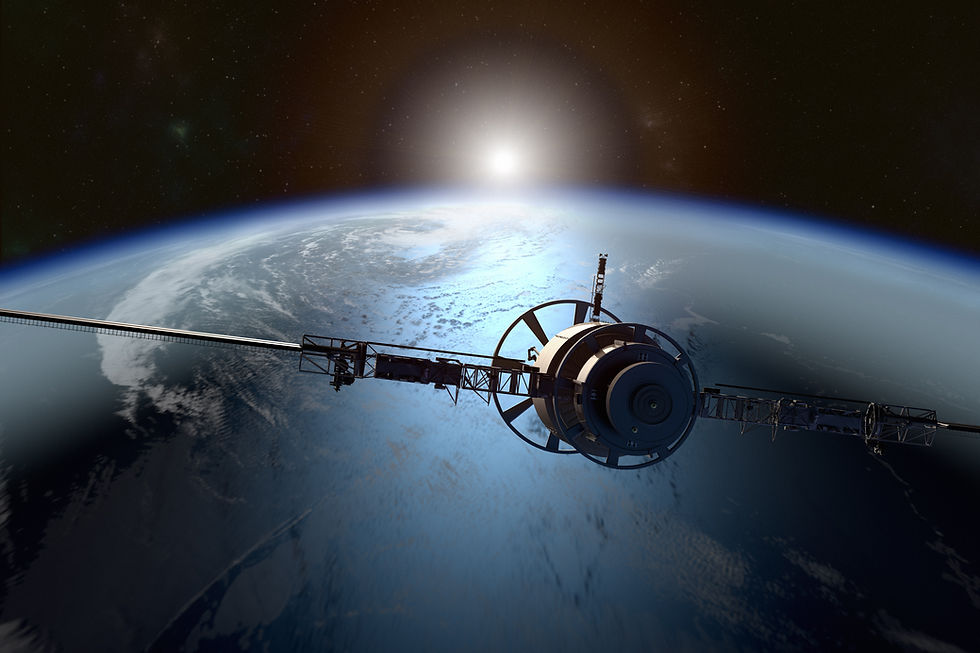
The Sun's Gravitational Grasp: Orchestrating the Cosmic Ballet
While the Sun is rightfully celebrated for lighting up our skies and warming our world, its influence extends much further. Acting as the grand conductor of our solar system's cosmic ballet, the Sun's gravitational force and radiative emissions have sculpted the destinies of planets, moons, asteroids, and comets. Let's explore this gravitational dance and the Sun's profound impact on the solar system.
-
Planetary Orbits: At the most fundamental level, the Sun's immense gravitational pull dictates the orbits of all the planets in our solar system. From the swift orbit of Mercury to the leisurely path of Neptune, each planet's trajectory is a delicate balance between its own motion and the Sun's gravitational attraction.
-
Tidal Forces: The Sun, in tandem with the Moon, is responsible for the tidal ebb and flow we observe on Earth. While the Moon's influence on our tides is more pronounced due to its proximity, the Sun plays a significant role, especially during new and full moons when the Sun, Earth, and Moon align, resulting in more pronounced tides known as spring tides.
-
Solar Radiation: The Sun's continuous stream of photons doesn't just provide light and warmth. This solar radiation has played a key role in the formation and evolution of planetary atmospheres. For instance, the intense solar radiation stripped away the atmospheres of planets like Mercury and had significant effects on Mars.
-
Solar Wind Impact: The solar wind, a stream of charged particles emanating from the Sun, interacts with planetary magnetospheres. On Earth, this interaction manifests as the stunning auroras (Northern and Southern Lights). On planets without significant magnetic fields, like Mars, the solar wind can slowly erode the atmosphere over time.
-
Comets' Tails: Ever noticed how the tail of a comet always points away from the Sun? This is a direct result of the Sun's influence. As comets approach the Sun, its heat causes the icy nucleus to vaporize, creating a glowing coma. The solar wind then pushes this material outwards, forming the comet's tail.
-
Catalyst for Life: On a more profound note, the Sun's energy was essential for catalyzing life on Earth. By providing the necessary warmth and energy, it set the stage for the complex chemical reactions that eventually led to the emergence of life.
The Sun's influence is both grand in scale and intricate in detail. It's not just a luminous body in the sky but the anchor that holds our solar system together, driving the motions of celestial bodies and influencing the very conditions for life. Recognizing the Sun's role gives us a deeper appreciation of our place in the cosmos and the delicate balance that allows life to flourish on our blue planet.

The Sun's Evolutionary Odyssey: From Stellar Birth to Final Curtain
Stars, like living organisms, have a life cycle – they're born, they live out their days, and eventually, they die. The Sun, our beloved star, is no exception. Its life story is one of cosmic drama, unfolding over billions of years. Here’s an overview of this stellar evolution:
-
Formation: Around 4.6 billion years ago, in a molecular cloud rich with gas and dust, disturbances (possibly from nearby supernovae or gravitational interactions) triggered a collapse within a certain region of the cloud. As material accumulated, the central region became increasingly dense and hot, leading to the birth of our Sun.
-
Main Sequence Phase: This is the Sun's current stage and the one it has been in for the majority of its life. Here, the Sun fuses hydrogen into helium in its core, a process that releases immense energy in the form of light and heat. This phase, marked by relative stability, lasts for roughly 10 billion years. Given that our Sun is about 4.6 billion years old, it's roughly halfway through this stage.
-
Red Giant Phase: As the Sun exhausts its hydrogen supply, its core will contract and heat up, while the outer layers will expand. The Sun will then transform into a red giant, large enough to potentially engulf the inner planets, including Earth. During this phase, helium in the core will fuse to form carbon and oxygen.
-
Planetary Nebula and White Dwarf: Following the red giant phase, the Sun will shed its outer layers, creating a colorful shell of ionized gas known as a planetary nebula. What remains of the Sun will be its hot core, now a white dwarf. This dense remnant will be roughly the size of Earth but will carry much of the Sun's original mass.
-
Black Dwarf: Over billions of years, the white dwarf will gradually cool and fade. While this process is incredibly long, it's believed that eventually, the white dwarf will become a cold, dark, and inert mass known as a black dwarf. However, the timescale for this transformation is longer than the current age of the universe, so no black dwarfs exist yet.
The life cycle of the Sun is a testament to the dynamic and ever-changing nature of the universe. While our Sun has billions of years left in its life, understanding its eventual fate offers a glimpse into the vast temporal scales and transformative processes of the cosmos. Even in its decline, the Sun will showcase a celestial spectacle, reminding us of the transient beauty of the universe.

Peering into the Sun: Observations and Discoveries
Since ancient times, the Sun has been an object of wonder and reverence, casting its light on human civilizations and shaping mythologies. However, with the advancement of science and technology, our gaze into the Sun has deepened, transforming ancient myths into concrete understanding. Let’s delve into the history and techniques of solar observations and what they've revealed.
-
Historical Observations: Ancient civilizations, from the Egyptians to the Mayans, observed the Sun primarily for timekeeping, religious, and agricultural purposes. Instruments like sundials were used to measure time based on the Sun's shadow.
-
Sunspots and Telescopes: The invention of the telescope in the early 17th century was a game-changer. Astronomers like Galileo Galilei began noting the presence of sunspots, challenging the then-prevailing belief of the Sun being a perfect, unblemished orb.
-
Spectroscopy and Solar Composition: In the 19th century, the technique of spectroscopy – splitting light into its constituent colors – allowed scientists to determine the Sun's composition. Helium, for instance, was first discovered in the Sun before it was found on Earth, hence its name derived from 'Helios', the Greek word for Sun.
-
Space-based Observatories: Ground-based telescopes face challenges due to Earth's atmosphere. The launch of space observatories, like the Solar and Heliospheric Observatory (SOHO) and the Solar Dynamics Observatory (SDO), provided unprecedented clarity by observing the Sun from outside Earth's atmosphere.
-
Solar Missions: NASA’s Parker Solar Probe, launched in 2018, is on a mission to "touch" the Sun. By getting closer to the Sun than any previous mission, it aims to gather data about the Sun's outer atmosphere and solve longstanding mysteries about its behavior.
-
Understanding Solar Weather: Observing the Sun isn't just about understanding our star but also about predicting and preparing for space weather events, like solar flares and coronal mass ejections, which can impact technology on Earth and pose risks to astronauts in space.
Observing the Sun, from early ground-based telescopes to sophisticated space missions, has enhanced our understanding of not just our star but of stars throughout the universe. These endeavors are a testament to human curiosity and our relentless pursuit to understand the cosmos. As technology advances, our insights into the Sun and its mysteries will only deepen, shedding light on the intricate dance of cosmic forces.
Our relationship with the Sun spans millennia, from ancient worship to modern scientific study. This celestial body, while being a constant in our daily lives, is a complex and dynamic marvel of the cosmos. Its processes, from nuclear fusion to the ejection of solar winds, play a pivotal role in the sustenance of life and the rhythms of our solar system. The continuous quest to understand the Sun—its anatomy, behavior, and eventual fate—remains at the forefront of astronomical exploration. As we peer deeper into its mysteries, we gain not only knowledge of our star but also profound insights into the universe's vast expanse. The Sun's tale, an intricate blend of science and wonder, serves as a reminder of our small yet interconnected place in the grand tapestry of existence.

Sun Viewing Disclaimer
CAUTION: Observing the Sun directly without appropriate protection can cause severe and permanent eye damage, including blindness.
-
Never look at the Sun directly without certified solar viewing equipment. This includes during solar eclipses, as significant damage can occur even in a short glance.
-
Ordinary sunglasses, even if very dark, are NOT safe for looking at the Sun. They do not provide sufficient protection against the harmful rays.
-
Avoid makeshift filters and methods such as smoked glass, stacked sunglasses, polarized filters, or looking at the Sun's reflection in the water. These are not safe methods and can result in irreversible eye damage.
-
Only use certified solar viewing glasses or solar telescopes to observe the Sun. Before use, always inspect them for scratches, punctures, or damages. If damaged, discard them.
-
Never use regular binoculars or telescopes to view the Sun without a professionally made solar filter, as they can concentrate the Sun’s rays and cause instant blindness.
-
Always supervise children during any solar observing activity and ensure they are using proper equipment correctly.
-
Be informed about the specific risks and best safety practices for any solar viewing event or activity.
Remember, the only time it's safe to view the Sun without special equipment is during the brief period of a total solar eclipse, known as totality. However, this is rare, lasts only a short time, and is only safe in specific areas. Always prioritize safety and ensure you are well-informed before attempting any solar observation.
Note: If you ever experience discomfort or visual issues after viewing the Sun, seek medical attention immediately.